Active shielding, Alpha Centauri, fusion propulsion and how humans could cross to another star
Active shielding technologies use electromagnetic fields to deflect dangerous radiation before it hits a spacecraft's hull, while Alpha Centauri is a triple-star system located 4.37 light-years away that hosts the closest known exoplanets to Earth.
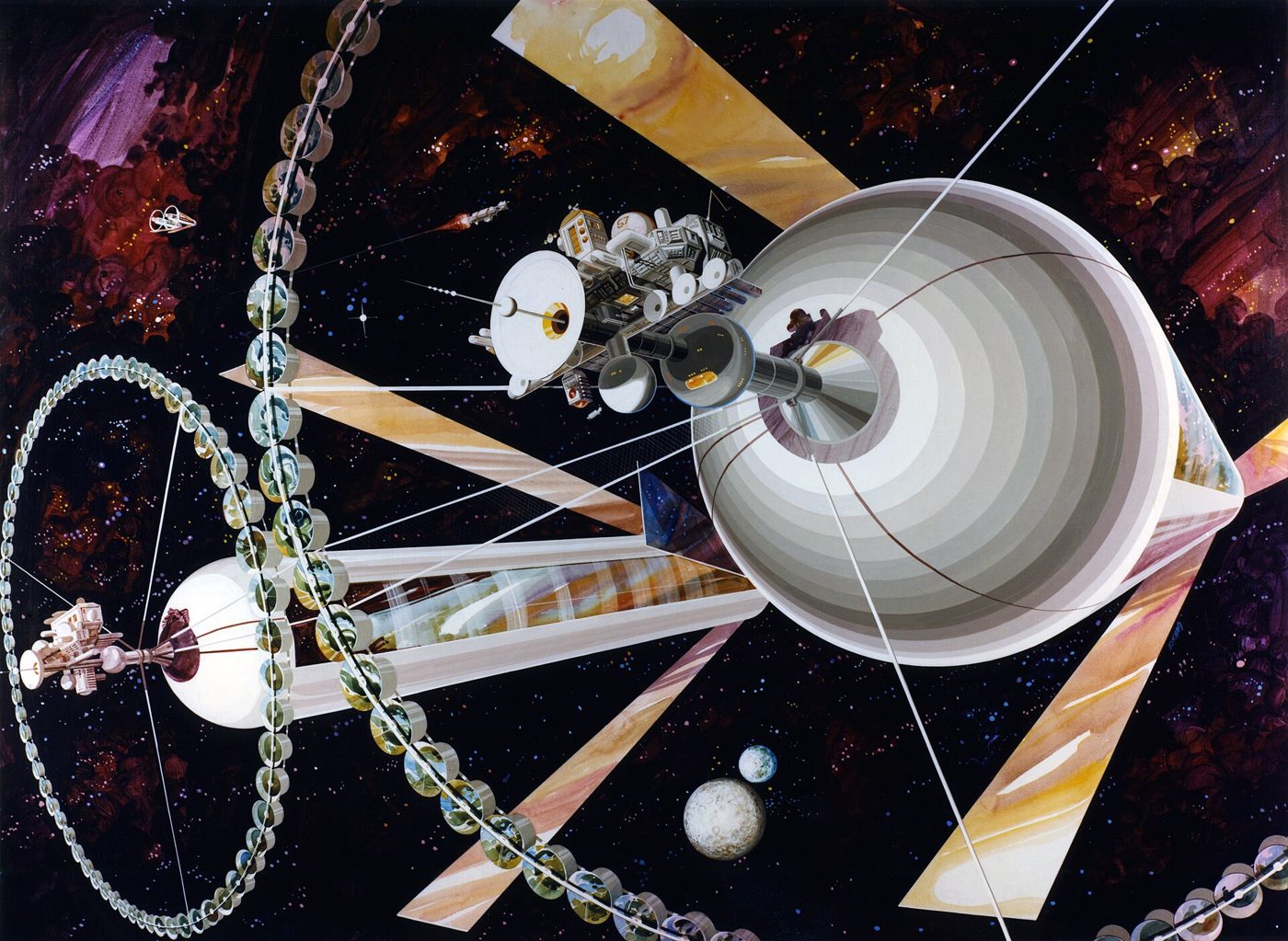
1. Active Shielding Technologies for Deep Space
Because thick metal walls create secondary radiation when struck by galactic cosmic rays (GCRs), space agencies and researchers are testing "active" shields that mimic Earth's natural magnetic field without adding massive weight.
Superconducting Magnetic Shields. Engineers are developing lightweight, high-temperature superconducting coils that generate a powerful magnetic bubble around a spacecraft. Because GCRs carry an electric charge, this artificial magnetosphere bends their trajectories away from the crew cabin—similar to how Earth's magnetic field protects us on the ground.
Electrostatic Shields. Another concept surrounds the spacecraft with a charged electric grid or plasma cloud. By maintaining a high positive voltage on the outer shell, the shield repels positively charged protons and heavy atomic nuclei before they reach the spacecraft structure.
Mini-Magnetospheres (Plasma Shields). Researchers have tested inflating a small cloud of ionised gas (plasma) around a spacecraft and threading it with a magnetic field. The plasma expands the magnetic field over a much wider area using minimal electrical power, creating a broader deflection zone against incoming radiation.
Current Engineering Hurdles. Generating a magnetic field strong enough to deflect the highest-energy galactic cosmic rays requires enormous electrical power and ultra-cold cryogenic cooling for superconductors, alongside magnetic shielding inside the cabin so the strong fields do not harm astronauts or disrupt ship electronics.
2. The Alpha Centauri Star System
Located roughly 4.37 light-years (about 41 trillion kilometres) away in the southern constellation Centaurus, Alpha Centauri is our solar system's closest stellar neighbour.
A Triple-Star System. To the naked eye, Alpha Centauri looks like a single bright star—the third-brightest in the night sky. Through a telescope, it resolves into a close binary pair of Sun-like stars (Alpha Centauri A and Alpha Centauri B) orbited at a much greater distance by a small, dim red dwarf called Proxima Centauri.
Proxima Centauri b. Orbiting Proxima Centauri at 4.24 light-years from Earth is Proxima b, a rocky exoplanet slightly more massive than Earth. It sits inside its star's habitable zone, meaning temperatures could allow liquid water on its surface, though frequent X-ray flares from its active red dwarf star may strip away its atmosphere.
Other Confirmed Worlds. Astronomers have also confirmed Proxima d, a tiny sub-Earth planet orbiting very close to Proxima Centauri, and found strong candidate signals for a giant planet orbiting Alpha Centauri A.
How Long to Get There. At Voyager 1's current speed of 61,000 km/h, a spacecraft heading toward Alpha Centauri would take roughly 73,000 years to arrive. Future laser-propelled light sails—such as Breakthrough Starshot—aim to cut that journey down to about 20 years by accelerating gram-sized probes to 20% the speed of light.
Atmospheric survival on Proxima Centauri b faces severe challenges from stellar flares and tidal locking that likely require underground habitats or artificial magnetic shields, while nuclear thermal and fusion propulsion replace slow chemical combustion with atomic reactions to slash deep-space travel times by half or more.
1. Atmospheric Survival and Terraforming on Proxima Centauri b
Orbiting its red dwarf star every 11.2 days at a distance 20 times closer than Earth is to the Sun, Proxima Centauri b experiences an extreme environment that differs sharply from Earth.
The Stellar Flare Threat. Proxima Centauri is an active flare star that blasts its planets with intense ultraviolet and X-ray radiation hundreds of times stronger than Earth receives. Over billions of years, these solar winds may have stripped away Proxima b's original atmosphere and boiled off surface oceans unless the planet formed with a massive reservoir of water and a strong magnetic field.
Tidal Locking ("Eyeball" World). Because Proxima b orbits so close to its star, gravitational forces likely keep one hemisphere permanently facing the star in scorching daylight while the opposite side remains frozen in endless night. If the planet retains an atmosphere and water, heat circulation could create a habitable "twilight ring" along the day-night terminator, giving the world the appearance of a giant eyeball from space.
Subsurface Habitats Over Terraforming. Rebuilding an entire planetary atmosphere on a flare-prone world would require deflecting constant stellar winds—perhaps by placing a massive magnetic dipole shield at the planet's L1 Lagrange point to create an artificial magnetosphere. In the near term, living in underground lava tubes or domed craters covered in thick ice and regolith offers far more practical protection from radiation and temperature extremes.
2. Nuclear Thermal and Fusion Propulsion
Chemical rockets—like the ones that launched Voyager and the Space Shuttle—burn fuel and oxidiser at relatively low temperatures, forcing spacecraft to coast unpowered for most of their journey. Nuclear propulsion unlocks millions of times more energy per kilogram of fuel.
Nuclear Thermal Propulsion (NTP). Instead of burning chemical propellant, an NTP engine uses a compact fission reactor to superheat liquid hydrogen to over 2,500 °C and blast it out a nozzle. Because hydrogen molecules are ultra-light, they exit the engine twice as fast as chemical exhaust, cutting a human trip to Mars from roughly nine months down to three or four months. NASA and DARPA have actively developed NTP prototypes like the DRACO program to demonstrate this technology in orbit.
Nuclear Electric Propulsion (NEP). In an NEP system, a fission reactor generates electricity to power high-efficiency ion or Hall-effect thrusters. While NEP produces gentle thrust that builds speed slowly, it uses tiny amounts of propellant and can accelerate continuously for years, making it ideal for heavy cargo missions to the outer planets.
Nuclear Fusion Propulsion. Fusion rockets aim to replicate the reaction inside the Sun by fusing light isotopes like deuterium and helium-3 into superheated plasma, then directing that plasma out the back with magnetic nozzles. Fusion propulsion could achieve exhaust velocities tens of times faster than chemical rockets, potentially allowing human crews to reach Saturn in under two years or launch true interstellar precursor missions.
Engineering Hurdles. While nuclear thermal engines rely on proven fission physics, fusion propulsion remains experimental because sustaining a net-energy fusion reaction inside a compact, lightweight spacecraft—while radiating away massive waste heat in the vacuum of space—requires breakthroughs in superconducting magnets and plasma containment.
Magnetic nozzles use intense electromagnetic fields to channel and accelerate multi-million-degree fusion plasma without melting the spacecraft, while generation ships and cryogenic sleep offer two distinct strategies for keeping human crews alive across multi-decade or multi-century journeys between stars.
1. How Magnetic Nozzles Work in Fusion Rockets
A fusion rocket generates plasma heated to tens or hundreds of millions of degrees Celsius—far hotter than the core of the Sun. Because no physical metal or ceramic wall can survive direct contact with that plasma, engineers replace traditional bell-shaped rocket nozzles with invisible magnetic fields.
Magnetic Containment. Powerful superconducting electromagnets arranged in rings around the engine create a "magnetic bottle" that keeps the electrically charged fusion plasma suspended in mid-air, preventing it from touching and vaporising the engine walls.
Converting Heat into Forward Thrust. Inside the reaction chamber, the magnetic field squeezes the plasma tightly, then flares outward toward the back of the ship like an invisible funnel. As the superheated plasma expands along these diverging magnetic field lines, its random thermal energy converts into high-speed directional motion.
Pushing Against the Ship. Unlike a chemical rocket where hot gas pushes directly against a metal nozzle wall, a fusion rocket pushes against its own magnetic field. As the charged plasma blasts backward, it exerts an equal and opposite magnetic force on the superconducting coils bolted to the spacecraft, propelling the ship forward.
The Detachment Challenge. One of the trickiest engineering hurdles in magnetic nozzle design is ensuring the plasma cleanly "detaches" from the magnetic field lines as it exits the ship. If the plasma stays trapped on the looping magnetic lines, it can curve back around toward the spacecraft, cancelling out thrust and damaging the hull.
2. Generation Ships vs. Cryogenic Sleep for Interstellar Travel
Even with advanced fusion propulsion, travelling to a neighbouring star system like Alpha Centauri could take anywhere from 50 to several hundred years. Mission architects generally propose two ways for humans to survive the voyage.
Generation Ships (World Ships)
Self-Sustaining Ecosystems. A generation ship is a massive, miles-long vessel designed as a closed-loop habitat where multiple generations of humans are born, live, and die before their descendants arrive at the destination.
Artificial Gravity and Biospheres. To prevent bone and muscle loss over centuries, the ship spins to simulate gravity via centrifugal force. Vast agricultural decks recycle air, water, and nutrients continuously, powered by onboard nuclear reactors.
Social and Psychological Hurdles. Beyond mechanical wear over centuries, the biggest risks are social: maintaining institutional knowledge, preventing cultural drift or conflict among crew members who never chose to board the ship, and ensuring genetic diversity in a small isolated population.
Cryogenic Sleep (Suspended Animation)
Metabolic Slowdown. Rather than keeping hundreds of awake crew members fed and entertained for centuries, cryogenic sleep (or torpor) aims to cool astronauts' bodies to halt cellular decay and reduce food, water, and oxygen needs to near zero.
Smaller, Faster Spacecraft. Because a sleeping crew does not need sprawling farms, exercise halls, or massive living quarters, the spacecraft can be built much smaller and lighter—allowing the same engines to accelerate it to much higher speeds.
The Ice Crystal Problem. Freezing human tissue normally causes water inside cells to form sharp ice crystals that rupture cell membranes. Researchers are investigating vitrification—replacing blood with medical cryoprotectants that turn tissue into a glass-like state without ice crystals—alongside induced synthetic torpor (similar to animal hibernation) that lowers body temperature gently for shorter multi-year stretches.
Autonomous AI Caretakers. While the human crew sleeps, an advanced autonomous computer and robotic maintenance system must navigate the ship, repair micrometeoroid damage, monitor life-support pods, and safely warm the crew back up upon arrival.